
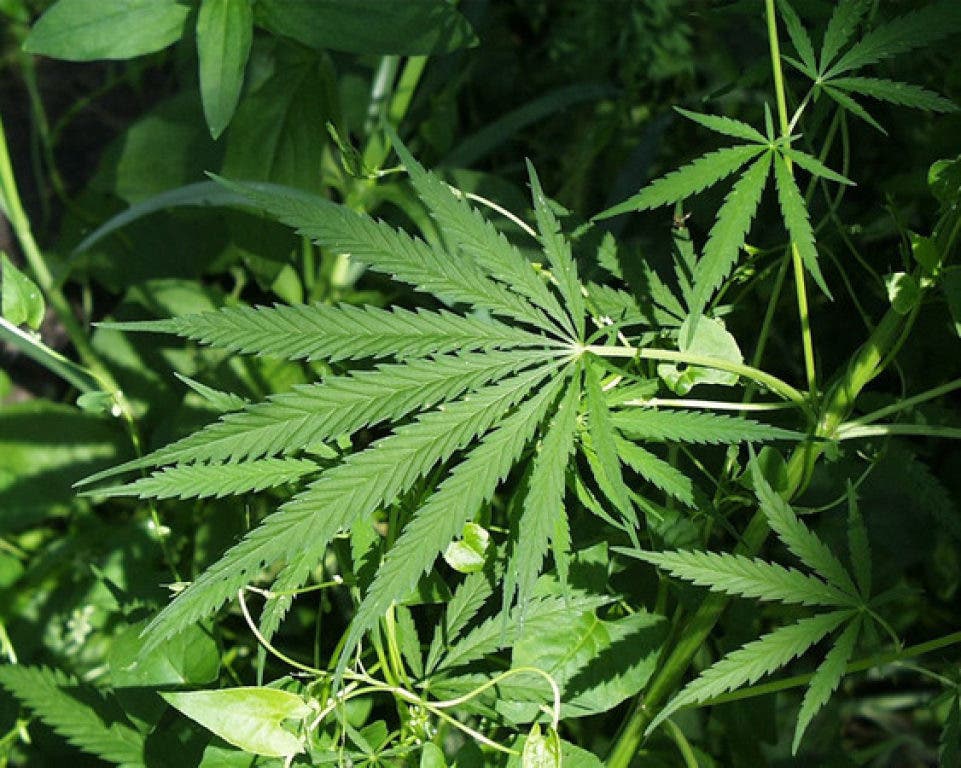
THIS NOVEMBER Washington residents will vote on Initiative 502, which, if passed, would decriminalize marijuana. I-502 will appear on Washington’s November 6 ballot like this:
“This measure would license and regulate marijuana production, distribution, and possession for persons over twenty-one; remove state-law criminal and civil penalties for activities that it authorizes; tax marijuana sales; and earmark marijuana-related revenues.”
Find out what's happening in Kirklandwith free, real-time updates from Patch.
Washington’s Secretary of State, in approving I-502 for the ballot, described the initiative as a law “decriminalizing marijuana and regulating it and taxing it much like liquor.” Marijuana would not be “legalized” under I-502 as some believe. Neither would it repeal any laws. Instead, the initiative would decriminalize marijuana and permit the State to generate needed tax revenue from its sale.
Currently, Washington and federal law (as well as many city ordinances) prohibit and criminalize marijuana in almost every respect. Washington’s limited exception – the Medical Use of Marijuana Act – permits a licensed physician to recommend, but not prescribe, marijuana to treat pain and complications related to severe diseases, including cancer.
Find out what's happening in Kirklandwith free, real-time updates from Patch.
Yet under I-502, unlicensed and non-medical related marijuana possession and growth would remain illegal; marijuana would remain a Schedule 1 drug alongside hallucinogenic substances, opiates and stimulants. The initiative would simply permit the possession of up to one ounce of dried marijuana, or seventy-two ounces of liquids that contain marijuana, or one pound of a solid substance that contains marijuana (think “baked-goods”) for adults who are at least twenty-one years old.
Our nation is no stranger to rules and regulations governing marijuana. Jamestown Colonial law actually mandated that all settlers grow hemp – a low tetrahydrocannabinol (THC) form of marijuana – on their properties. Hemp was, in fact, one of George Washington’s three primary crops. And since those colonial days, our nation’s original puritanical leanings have persuaded people that criminalizing marijuana is best. But now, as our progressive attitudes have changed, there is one sufficient reason – a human rights reason – to embrace a less prudish course and decriminalize pot; it’s time to vote Yes for I-502.
To put it bluntly, our current effort to enforce what are supposed to be our race-neutral drug laws is waged primarily against black Americans. According to a recent Stanford Law & Policy Review article, “Relative to their numbers in the general population and among drug offenders, black Americans are disproportionately arrested, convicted, and incarcerated on drug charges.” (The article is Race, Drugs, and Law Enforcement in the United States, published in the June 19, 2009 issue of the Stanford Law and Policy Review.)
But this discriminatory enforcement does not track actual drug use: citing comprehensive studies, that same article points out that it is estimated “that 111,774,000 people in the United States age twelve or older have used illicit drugs during their lifetime, of whom 82,587,000 are white and 12,477,000 are black.”
Equal treatment of all people – what is likely our most cherished democratic value – has been flagrantly abused – or at least disgracefully forgotten – when it comes to enforcing our drug laws. Decriminalizing marijuana is one step we can take toward achieving a better, less discriminatory, society.
Despite the inequality created by the enforcement of our drug laws, and despite the benefits that would arise from decriminalizing marijuana, there is a major problem with I-502. Even if the initiative passes, it is unlikely that Washingtonians would, or even could, actually enjoy the benefits of income generated from taxing marijuana. The initiative would permit the imposition of a 25 percent sales tax, 40 percent of which would be earmarked for spending on substance-abuse prevention, research, healthcare and education. It would also permit the establishment of private state-regulated marijuana-only supply stores. But establishing these storefronts, and accepting this tax revenue, would likely violate the U.S. Constitution and more specifically its Supremacy Clause.
Under the Supremacy Clause, when a state law conflicts with federal law – what is known as “preemption” – the federal law controls. Enforcing a state-created marijuana regulation system would ultimately violate federal law. For example, according to Alison Holcomb, co-author of the initiative, “depositing sales tax in a bank would constitute money laundering.” (Governor Gregoire, and both gubernatorial candidates Jay Inslee and Rob McKenna have opposed I-502 for this preemption reason.)
This consequence, however, is not enough reason to reject I-502. History is not void of instances in which state law has prompted change at the federal level. Prohibition, for example, was discarded by many states, Washington included, before the 21st Amendment to our U.S. Constitution was adopted. Passing I-502 now would serve the dual purpose of catalyzing federal change as well as priming Washington to capitalize off marijuana generated tax revenue (which our State badly needs) once the drug is federally legalized.
Let’s get to the point: just say yes, and vote to decriminalize marijuana this November.
_______________________________________________________
Trent Latta is an attorney and Kirkland resident. He can be contacted at TrentLatta@gmail.com.